
A New Foundation for Your Smile
Missing teeth change more than your smile. Eating the foods you love can get harder, and everyday things like speaking clearly can feel different too. Dental implants offer a solution that’s built to last and designed to look, feel and function like your natural teeth.
If dentures have left you dealing with slipping, discomfort or that constant awareness that something isn’t quite right, you have options that didn’t exist a generation ago. Modern implant dentistry has moved well beyond bridges and removable dentures.
What Are Dental Implants?
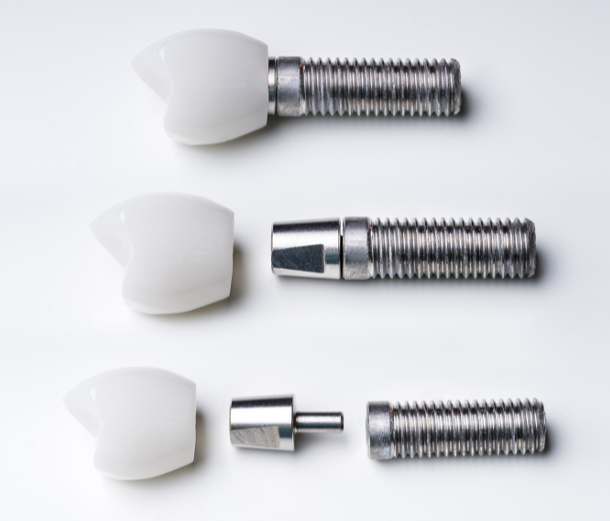
Think of a dental implant as a new tooth root. A small titanium post is placed into the jaw where a tooth once was. Once it fuses with the bone, a process called osseointegration, it becomes the stable foundation for a crown, bridge or full set of replacement teeth.
The result looks, feels and works like a natural tooth, because in every practical sense, it becomes part of you.
All-on-4: A Full Smile, Rebuilt
For patients missing a full arch of teeth, or tired of dentures that shift and slip, All-on-4 offers a fixed, non-removable alternative. Four precisely angled implants support a complete arch of replacement teeth, working with the bone you already have rather than requiring extensive grafting for most patients.
The angling is what makes this approach so practical. It allows All-on-4 to succeed with less bone than traditional implant methods typically need, opening the door for patients who might otherwise be told they need bone grafting first. For some patients, the fixed bridge can be attached on the same day as surgery, though this depends on individual circumstances and will always be discussed at your consultation.
What this means day to day
- A fixed bridge that stays put when you eat, laugh or speak
- No more taking your teeth out at night or soaking them in a glass
- Jawbone preservation, since implants stimulate bone the way natural roots do
- Long-term stability from biocompatible materials designed to integrate with your body
Every mouth is different, and what works brilliantly for one patient may need adjusting for another. That’s exactly what the assessment phase below is for.
Your Implant Journey

Phase 1: Assessment and Planning
Getting started: Your journey begins with a consultation where we review your dental and medical history together and map out what your assessment will involve.
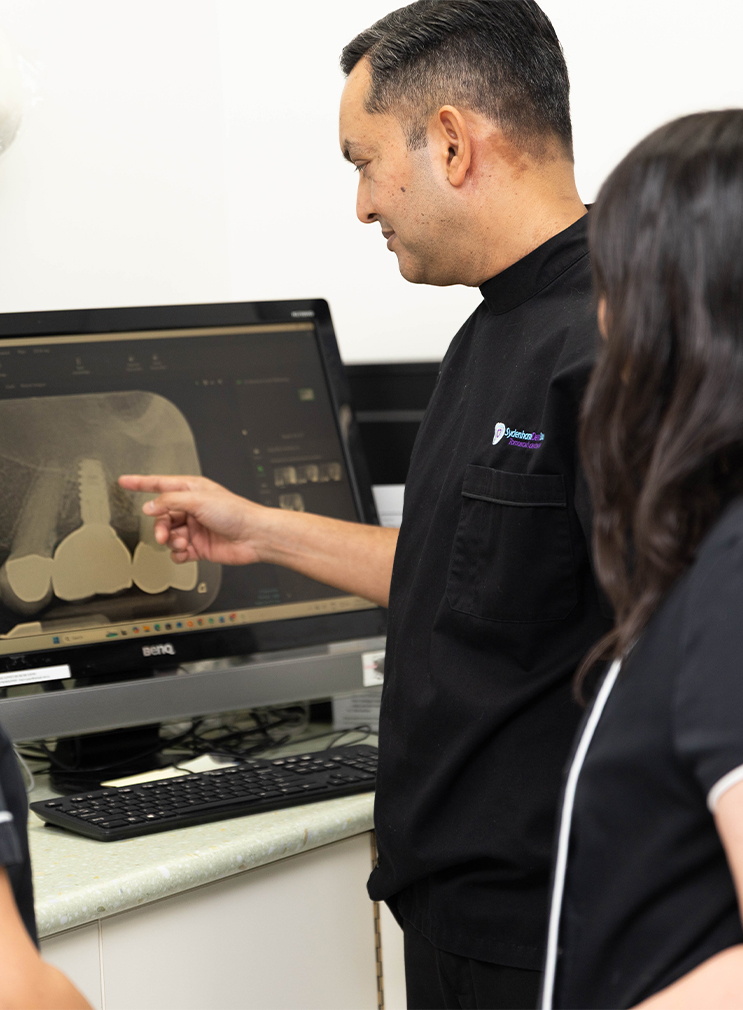
Seeing the full picture: X-rays, digital scans and models help us understand your jaw structure. In some cases, a specialist will assess bone quality and volume before we go further.
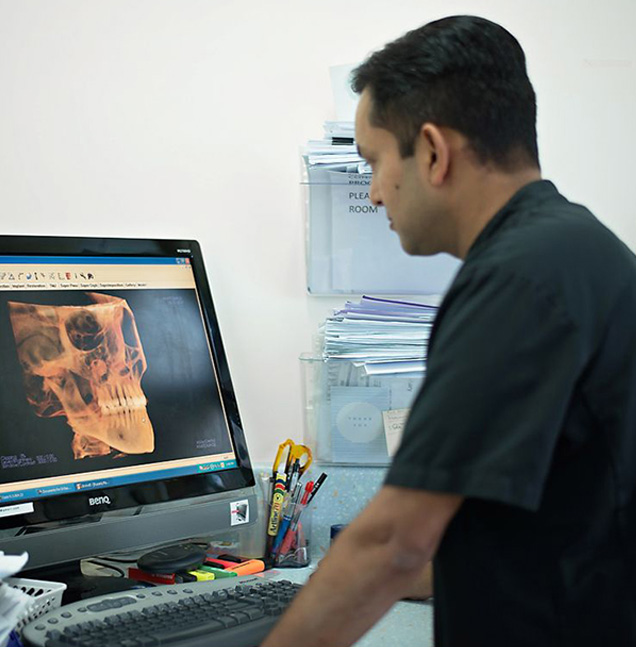
Precision imaging, in-house: Sydenham Dental Group has in-office 3D CBCT imaging (iCAT Next Generation), giving your dentist a detailed, three-dimensional view of your jaw for planning that's built around your anatomy. We also welcome referrals from other dentists who need access to 3D CBCT imaging.
Phase 2: Guided Surgery
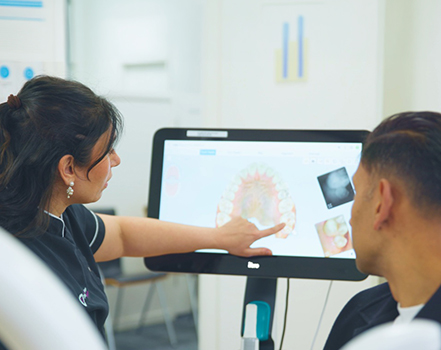
Planned with precision: Implant placement is mapped using 3D software combined with your CBCT data, so the surgical plan reflects your anatomy specifically rather than a standard template.
The MGUIDE template: This planning creates an MGUIDE surgical guide with an open-frame design, giving your dentist clear visibility throughout the procedure and access for irrigation and anaesthesia without needing to remove the guide.
*image for illustrative purposes only
Phase 3: Recovery and Aftercare
What to expect: Some swelling, mild discomfort, bruising or light bleeding is a normal part of healing after implant surgery. Pain relief and antibiotics may be prescribed to keep you comfortable, and individual recovery experiences vary.
Supporting your healing: Your dentist will walk you through aftercare instructions tailored to your procedure. Following them closely gives your implants the best possible foundation for long-term success.
Is This the Right Path for You?
Dental implants aren’t automatically suitable for everyone, and that’s worth knowing upfront rather than after treatment has started. Suitability generally comes down to:
- Enough bone volume and quality in your jaw
- Good oral hygiene habits
- General health that supports surgical healing
- A fully developed jawbone (this treatment isn’t offered to children or patients still growing)
This is exactly why the assessment phase matters so much. Conditions affecting bone density or healing can change what’s possible, and a thorough pre-surgery evaluation helps your dentist recommend the safest, most effective path for your specific situation. If implants aren’t the right fit for you, we’ll talk through what is.
Before
After
About this case
Concern: Missing teeth and uneven tooth alignment affecting the bite and the ability to chew, along with dissatisfaction with the appearance of the smile.
Treatment: All-On-4 (upper and lower temporary prosthesis)
Timeframe: 1 week from placement of implants
After image taken: Immediately after final stage of treatment
*Outcomes shown are only relevant for these patients and do not necessarily reflect results other patients may experience.
Ready to Explore Your Options?
The best way to know if dental implants or All-on-4 are right for you is a conversation with your dentist. Book a consultation with Sydenham Dental Group and find out what’s possible for your smile.